From Testing to Development: My Next Chapter at Trane Technologies
How my experience as a Controls Software Test Intern prepared me for a Software Developer Intern role.

Brendan Lambrecht
Building a Foundation
A year ago (from the time of this articles release), I stepped into my role as a Controls Software Test Intern at Trane Technologies with a solid academic background but limited real-world experience. I knew the fundamentals—Java, Python, object-oriented programming—but I had yet to see how those concepts held up under the pressure of an enterprise environment.
Looking back, that first internship turned out to be one of the most impactful learning experiences of my career. It didn't just teach me about testing; it taught me how professional software teams operate, how quality assurance shapes product outcomes, and how deeply automation can transform a workflow.
What the Test Intern Role Taught Me
Test Automation and Scripting
My primary responsibility was developing and executing automated test scripts based on functional specifications. This meant diving deep into Robot Framework, debugging test scripts for accuracy, and analyzing results to identify issues before they reached production.
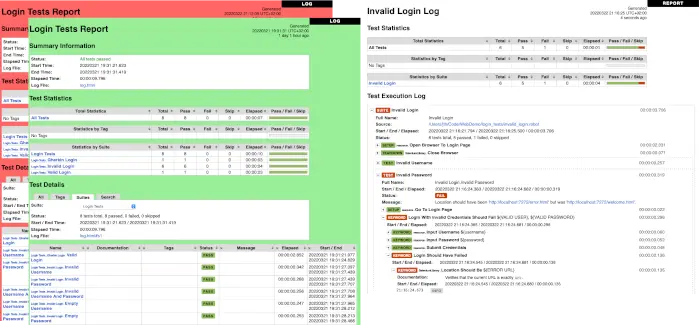
The discipline of writing thorough, repeatable tests gave me a developer's appreciation for code quality. Every script I wrote needed to be maintainable, well-documented, and resilient to changes in the underlying system—principles that translate directly to software development.
AI and MCP Integration
One of the most exciting parts of my test internship was the opportunity to engage in professional research practices for integrating AI and Model Context Protocol (MCP) into Trane's test automation pipeline. This work pushed me beyond my comfort zone and into emerging technology territory that few interns get to explore.
Learning to bridge AI capabilities with existing enterprise systems gave me practical experience in a skill that's becoming increasingly essential across the industry. It also reinforced my passion for adopting and mastering new technologies.
Collaboration with Engineering Teams
Perhaps the most valuable aspect of the role was collaborating directly with software developers, systems engineers, and product teams. I participated in formal acceptance testing, verified software fixes, and communicated findings that influenced development decisions.
These interactions gave me a front-row seat to the full software development lifecycle—from requirement gathering through deployment—and helped me build the communication skills necessary to thrive in a development role.
The Transition to Software Development
When the opportunity arose to move from testing into a Software Developer Intern role, I felt prepared in a way I wouldn't have been a year ago. The foundation I built as a test intern gave me:
- A Quality-First Mindset: Understanding how code will be tested makes you a better developer from the start
- Systems-Level Perspective: Seeing how individual components fit into larger control systems informs better architectural decisions
- Cross-Functional Communication: Experience translating technical findings across teams makes collaboration more effective
- Automation Experience: Hands-on work with scripting and automation pipelines transfers directly to development workflows
Looking Ahead
I'm genuinely excited about this next chapter. The Software Developer Intern role represents an opportunity to apply everything I've learned—not just about coding, but about professionalism, collaboration, and continuous learning—while building new skills in direct software development.
I'm grateful to the mentors and teammates who supported my growth over this past year, and I'm eager to contribute more directly to the products and systems that make Trane's solutions industry-leading.
The best preparation for a new role isn't just studying—it's the hands-on experience of solving real problems alongside talented people.
Onward to the next challenge.